
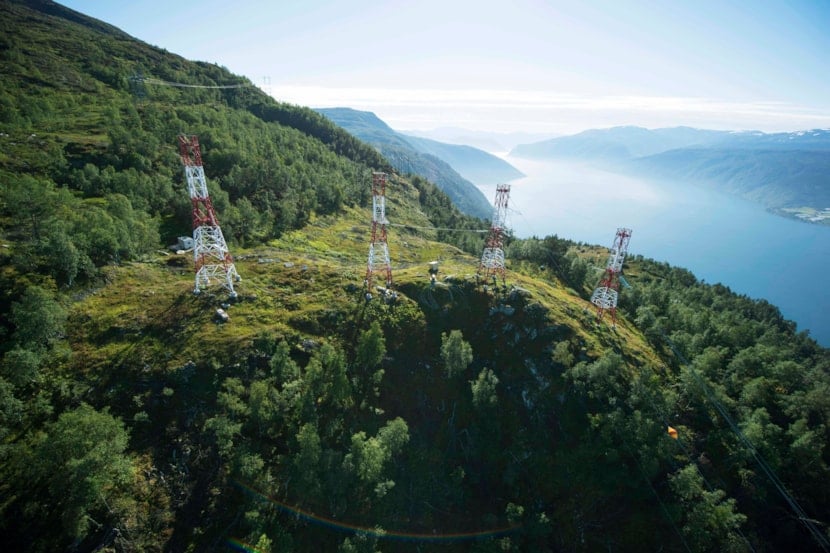
Key figures for 2025
- Zero new energised installations in undisturbed nature
- 1.36 km2 of vulnerable or valuable nature affected by new energised installations
- 71.4 % of major projects documented the use of the mitigation hierarchy
The mitigation hierarchy
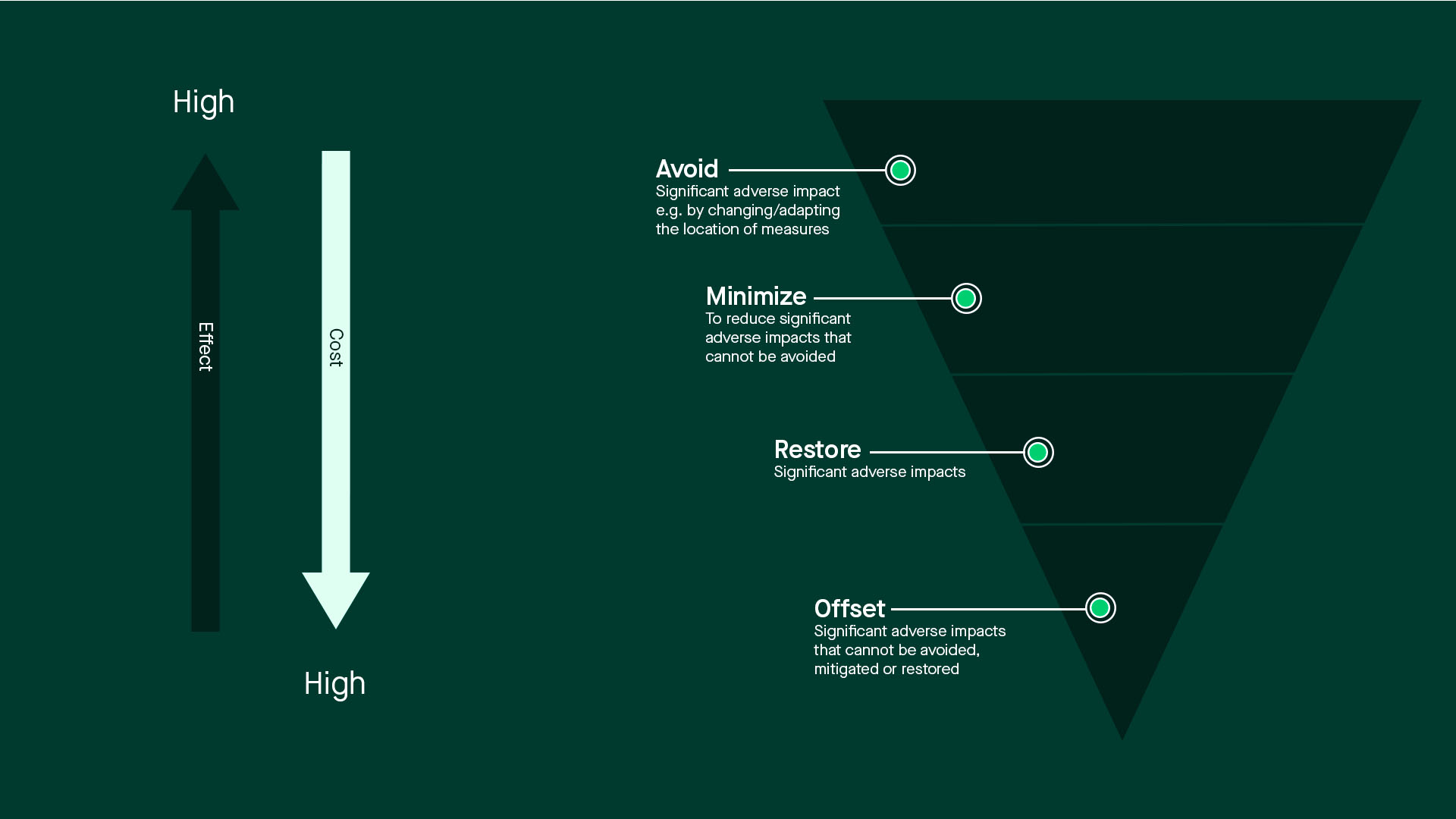
Statnett has set a target to document adherence to the mitigation hierarchy in all major projects by the end of 2026. The mitigation hierarchy is an international methodology aimed at minimizing negative environmental impact. In practice, this means to avoid conflicts where possible, limit the impact of necessary measures, restore damage caused during operations, and as a last resort, compensate for the loss of critical habitats by restoring nature.
How we work to achieve the targets:
Avoid
- Prioritise the use of grey areas for construction sites and substations
- Commit to avoiding deforestation
- Avoid planned maintenance work during nesting and calving periods for vulnerable species
- Strengthen routines for environmental control in major projects.
- Development and use of Statnetts land-use index (SAI)
Minimise
- Minimise substation area
- Development and use of project-based nature accounting
- Competitive tendering for temporary land use
- Pilot project on value-chain traceability for steel
Restore/compensate
- Removal of invasive alien species at Statnetts substations
- At least one biodiversity-enhancing measure in every project
- Require restoration of all temporary construction sites
Statnett affects nature in several ways. The impacts vary across habitats and at different stages of the infrastructure lifecycle. These effects stem from disturbances related to construction and operational activities, as well as land-use and the fragmentation of habitats resulting from design choices and existing infrastructure. Statnett also has direct impacts on nature through the extraction and production of the materials we produce.
For more information about Statnetts impacts and the measures we implement, see our transition plan and our annual report.