
Key figures for 2025
- A 22 % increase in total greenhouse gas emissions compared with 2024, mainly due to new construction projects in 2025
- Measures outlined in the transition plan will help reduce emissions from grid infrastructure projects, and we expect a continued growth in newly energised grid installations in the years ahead
Our greenhouse gas emissions
We use 2023 as the base year for our climate targets. Total emissions that year were 304,000 tonnes of CO2-equivalents and our greenhouse gas inventory shows the following distribution of emissions:
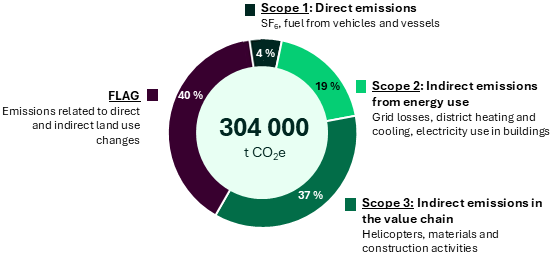
Scope 1 (direct emissions) accounts for 4 % of our total emissions. This includes emissions of sulphur hexafluoride (SF₆), which is used as an insulating gas in electrical installations. SF6 is a greenhouse gas that is 23,500 times stronger than CO2. We also have some emissions from fuel use in our own operations.
Scope 2 (indirect emissions from energy use) accounts for 19 % of our total emissions and mainly arise from transmission losses of electricity transported through the transmission grid.
Scope 3 (other indirect emissions in the value chain) accounts for 37 % of our emissions and are linked to the production of purchased goods and services.
FLAG (Forest, Land and Agriculture) emissions account for 40 % of our total emissions. FLAG emissions concern emissions from land‑use change resulting from the development of new grid infrastructure
Our climate targets
We have set targets for all emission categories for 2030 and 2050. The targets have been developed in line with the Paris Agreement and follow the Science Based Targets initiative (SBTi) methodology for absolute targets. We are currently in the process of validating our targets with SBTi.
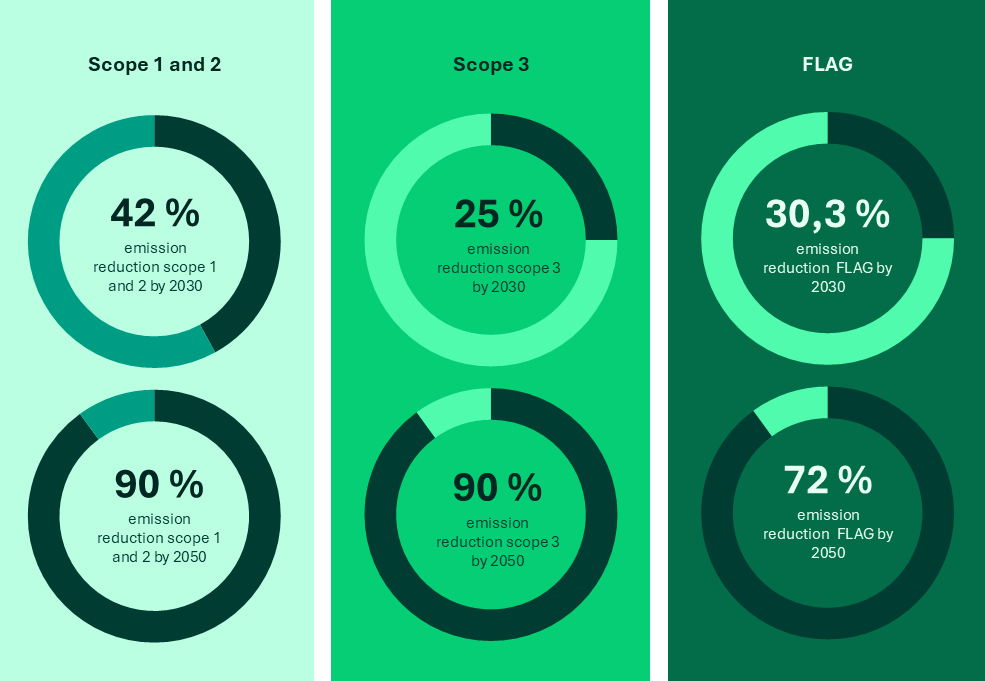
Scope 1 and 2
- 42 % emission reduction by 2030
- 90 % emission reduction by 2050
Scope 3
- 25 % emission reduction by 2030
- 90 % emission reduction by 2050
FLAG
- 30, 3 % emission reduction by 2030
- 72 % emission reduction by 2050
How we work to achieve the targets:
To reduce emissions, we will, among other things:
- Reduce both leakage and the use of SF₆, with a goal for Statnetts facilities to be completely SF₆-free by 2050. Statnett will adopt alternative technologies with significantly lower climate impact.
- Replace helicopters with drone technology for inspections.
- Increase the share of materials and construction work with lower emissions. We set climate requirements in procurement processes for grid development projects.
- Reduce land use and construction in carbon-rich nature.
Read more about our targets and measures to reduce emissions in the transition plan and our annual report.