
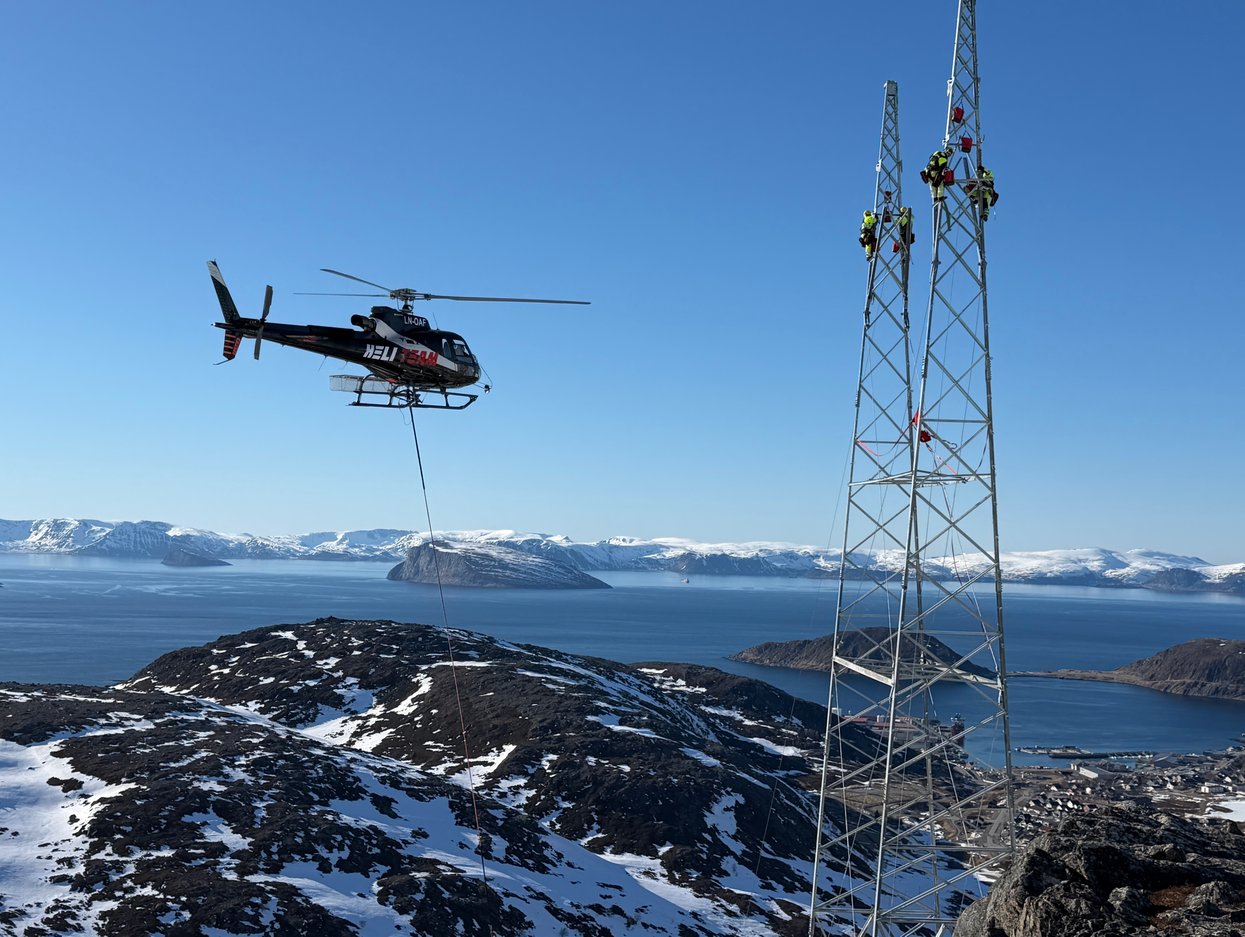
- At the end of 2025, Statnett had 248 active development projects. During the first half of 2026, this increased to 271 projects that are now under way. One of our key priorities is to increase transmission capacity between regions, says Cathrine Lund Larsen, Executive Vice President Finance and CFO of Statnett.
In addition to the high level of activity in new grid development, Statnett is working to increase the capacity and utilisation of the existing power system.
- Building new grid infrastructure takes time, and we are therefore working systematically to increase capacity in both the existing grid and the power system. This includes measures such as temperature uprating of power lines and flow-based market coupling, explains Lund Larsen.
The high pace of development requires substantial investments, which will increase the cost of using the transmission grid. Pressure in supplier markets, higher interest rates and changes in individual projects are contributing to increasing costs across the project portfolio.
- Statnett invested NOK 6.4 billion in the first half of 2026. This is NOK 1.7 billion more than in the first half of 2025. We are actively working to improve cost efficiency and are achieving significant savings through both direct reductions and cost avoidance, says CFO Cathrine Lund Larsen.
Strengthening capacity between north and south
To strengthen north-south capacity on the west coast of Norway, Statnett is making good progress with reinforcements between Sogndal and Sauda, where we are constructing the world's longest 420 kV fjord crossing over the Sognefjord.
In Finnmark, we are halfway through the construction of the new 420 kV power line between Skaidi and Hammerfest, while preparations are under way for construction eastwards to Lebesby and additional studies onwards towards Seidafjellet. To facilitate planned industrial consumption in the Haugaland region, a new power line is being constructed between Blåfalli and Gismarvik
In 2025, Statnett increased capacity in the existing power gridby 1,000 MW. So far this year, capacity in the existing gridhas been further increased by up to 1,200 MW, mainly as a result of temperature uprating of power lines. A total of 118 temperature uprating projects on existing power lines are planned, of which 58 are currently under way.
Increased capacity in the existing power grid and optimisation of system operations help facilitate more grid connections and reduce price differences. At system level, flow-based market coupling is among the measures that have made significantly more capacity available between northern and southern Norway and Sweden, as much as 700 MW since it was introduced.
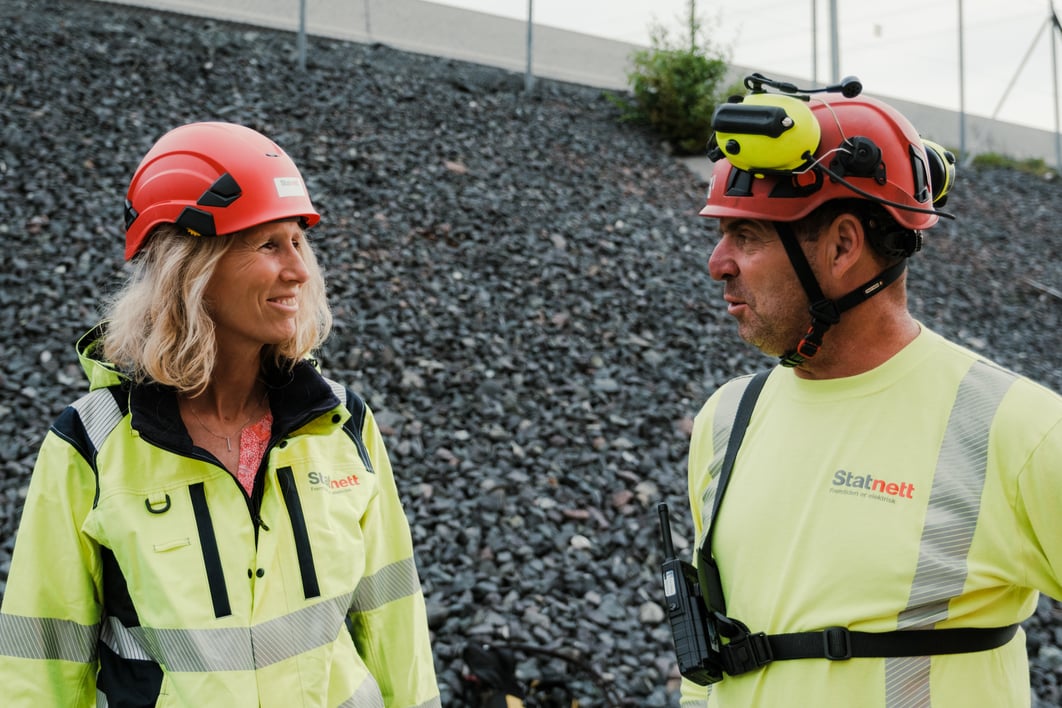
- Flow-based market coupling helps us make even better use of the grid and gives the power market access to more capacity in the day-ahead market. At the same time, it has contributed to higher costs in the balancing markets, particularly during the first half of 2025. Together with automated balancing, this is one of the largest changes to the power system in recent years, says Lund Larsen.
Strong growth in applications for grid capacity
Over the past 12 months, Statnett has connected more than 600 MW of new electricity consumption and 100 MW of new electricity production to the power system. At the same time, the queue of new customers seeking grid connection is growing rapidly.
- In the first half of 2026, we received mature applications for grid connection totalling around 3,500 MW. This represents an increase of 2,000 MW compared with the same period last year, says Lund Larsen.
Statnett has undertaken extensive efforts to review the queue of parties seeking grid connection, and, in 2026, introduced stricter maturity requirements for being placed in the queue and reserving capacity.
New tariff model for better utilisation of the grid
In 2026, Statnett changed the tariff model to facilitate better utilisation of the grid. The objective is to provide efficient price signals and ensure that costs more closely reflect the grid capacity utilised by different customer groups.
Improved underlying profit
Statnett’s underlying profit was NOK 914 million in the first half of 2026, compared to an underlying loss of NOK 1,261 million in the same period of 2025. The improvement in the underlying profit is primarily due to lower ancillary costs.
Statnett's Financial Results
|
(Amounts in NOK million) |
H1 - 2026 |
H1 - 2025 |
|---|---|---|
|
Underlying profit |
914 |
-1 261 |
|
Total permitted revenue regulated operations |
15 423 |
8 651 |
|
Total operating expenses |
8 502 |
9 568 |
|
Accounting profit for the period |
-342 |
737 |
|
Accounting total operating revenue |
9 324 |
11 530 |
|
Congestion revenue |
5 359 |
7 382 |
|
Accumulated higher revenue at the end of period |
297 |
7 098 |
|
Investments |
6 424 |
4 744 |
Statnett’s financial performance is best reflected by the underlying result. The Regulatory Authority for Energy (RME) sets a cap on permitted revenue, and the underlying result is based on this. As operating expenses and ancillary cost are included in permitted revenue with a two-year time lag, the underlying results will also vary significantly from year to year.
The Group made an accounting net loss of NOK 342 million in the first half of 2026, compared with a positive accounting profit in the first half of 2025. The decrease in accounting profit is primarily due to lower revenue from tariffs and congestion revenues. The decrease was partially offset by decreased ancillary costs.
The difference between the reported accounting result and the underlying result, referred to as higher or lower revenue, is made up by future grid tariff adjustments. In addition, Statnett can reimburse directly to underlying grids in accordance with the temporary regulation on the use of congestion revenue, which currently applies through 2026. This ensures that, over time, Statnett’s accumulated reported revenues align with the regulated permitted revenue.
In 2026, Statnett received a resolution granting compensation of NOK 5.2 billion for increased ancillary costs during the period 2021–2024. Of this amount, NOK 4.9 billion was included in the underlying result in 2025, while the remaining amount was included in the first quarter of 2026. In permitted revenue, the full NOK 5.2 billion compensation was included in the first quarter of 2026.